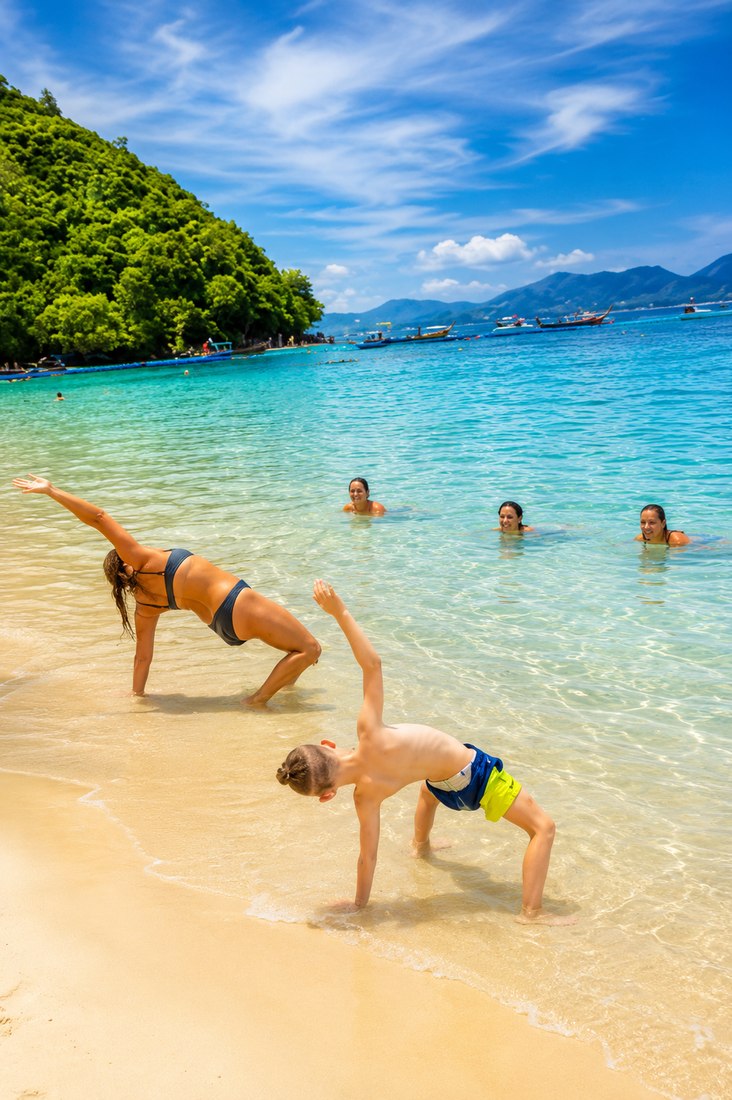
Example before instruction
A child first sees what the adults around them actually do.
Children do not need yoga reduced to entertainment. They need adults who practise, a structure that respects their agency, and a path from movement and breath toward attention and inner work.
From Hatha to Raja, together: body → breath → senses → attention → self-knowledge.
The first teacher
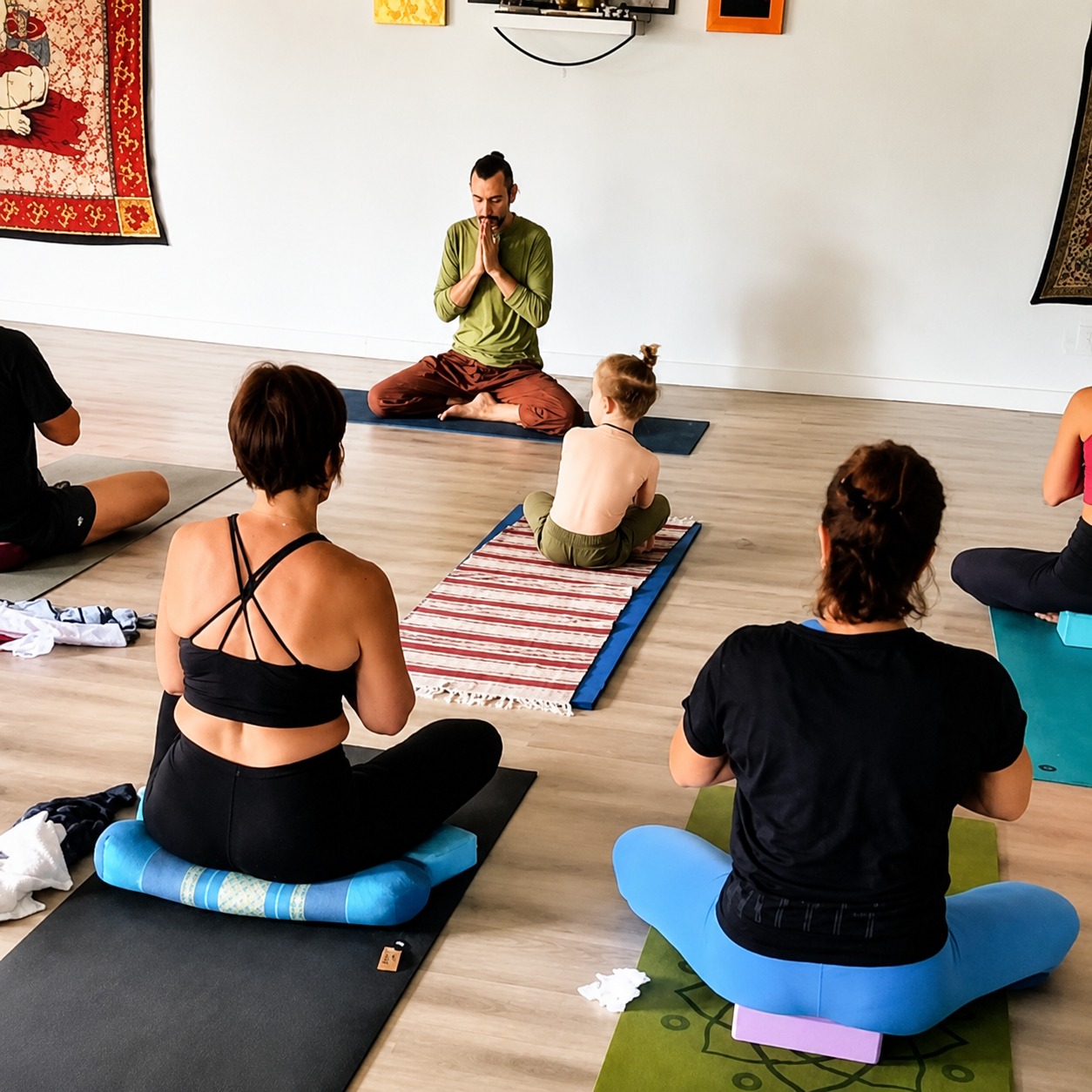
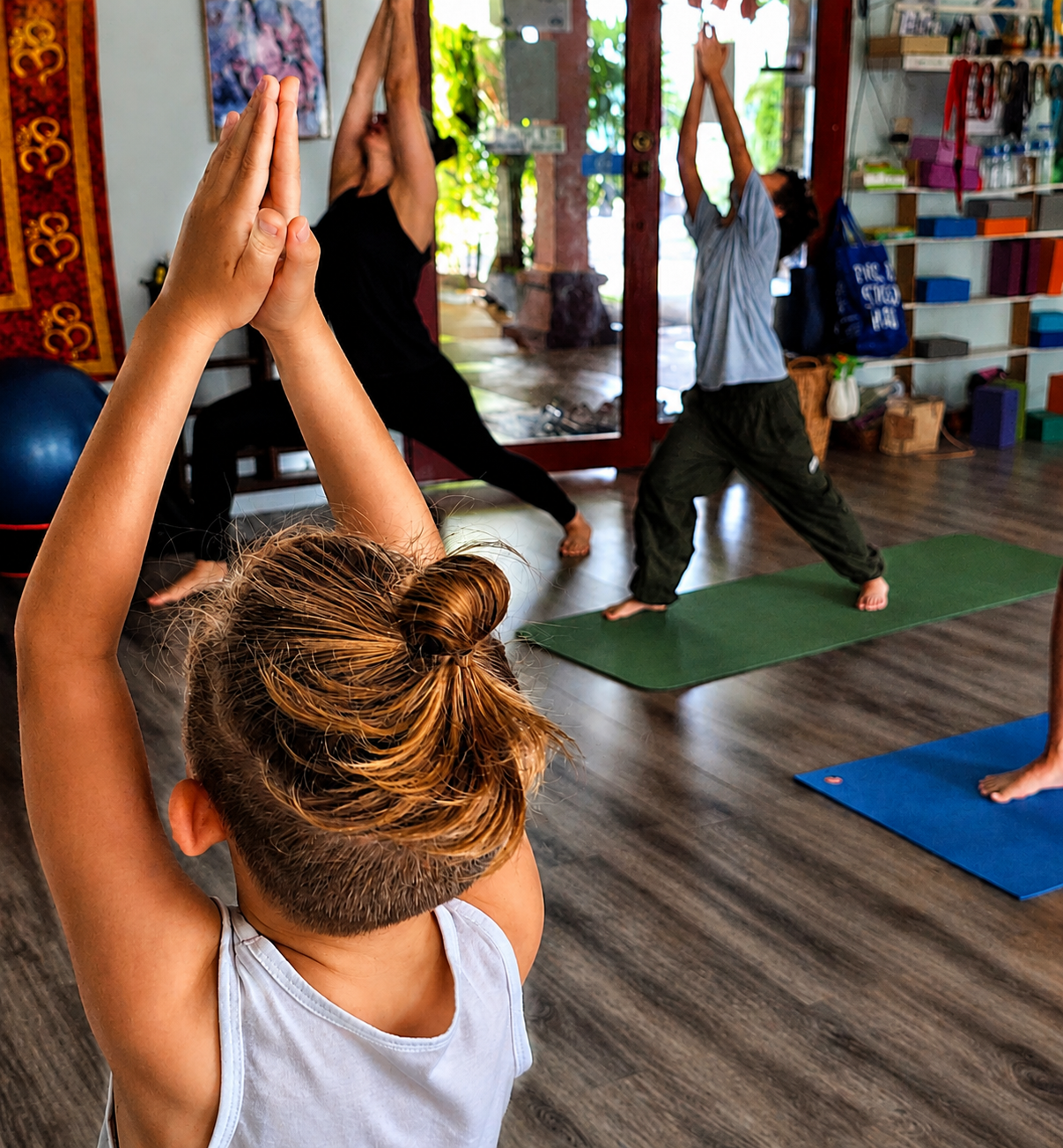
Practice is not something done to a child. The adult practises first. The child observes, joins, experiments and gradually takes responsibility for the practice.
The aim is not obedience and not a perfect picture. The aim is to create clear boundaries, real example and enough freedom for discipline to become internal rather than imposed.
A child first sees what the adults around them actually do.
Boundaries can be clear without turning practice into coercion or entertainment.
Guidance should gradually create a practitioner who can continue without being constantly managed.
Open the Family Practice Portal, watch the free parent introduction and explore the structure before deciding.
Asana gives the child a concrete body to work with. Pranayama introduces breath as an object of attention. Pratyahara begins the inward turn. Concentration and meditation are no longer foreign ideas when attention has been trained through lived practice.
Movement, balance, coordination and a felt relationship with the body.
Pranayama begins to connect physical practice with attention and self-regulation.
The practice starts to become less dependent on external stimulation.
The child learns to remain with one task, one breath and one point of focus.
Practice becomes a way to notice one's own state rather than only perform for an observer.
Different breathing practices approach regulation from different angles, but they repeatedly ask the child to organise attention, rhythm, movement and internal state.
Remain with one action long enough to complete it instead of being pulled away by every new stimulus.
Notice that attention has moved and come back to the breath, movement or instruction.
Move from one instruction or rhythm to another while keeping the structure of the practice.
Stop, wait, listen and respond to the next instruction instead of reacting immediately.
Maintain a repeated breathing or movement pattern with less external prompting.
Coordinate several streams of information at once and keep them working together.
Recognise agitation, fatigue, loss of rhythm or growing steadiness before the parent has to name it.
After excitement or distraction, practise returning to a more organised state.
It is a training proposition. Research on structured pranayama, high-frequency yoga breathing, slow breathing and yoga-based programmes reports measurable changes in attention, executive function, reaction time, perceived stress and autonomic regulation. We show the studies and their limits openly.
Continue to the portal for a free video and a clear overview of the membership.
Each technique can have its own short preview, explanation and full guided practice. Finished films are added here as the library grows.

How the parent participates, controls rhythm and posture, recognises stop signals, uses quiet observation between rounds and prepares the child for the full guided practice.
Open the Kapalabhati module
The method behind the practice: breath-led movement, weight transfer, progressive balance work and the shift from external guidance toward internal attention.
Open the Ujjayi module
A complete practice moving from a stable base to more demanding foot positions and balance while the breath remains slow, audible, even and continuous.
Open the Ujjayi moduleArchive footage of adults and children practising in the same space, with movement, breath, concentration and rest.

A Sunday family class moving from standing work and inversions toward pranayama, meditation and savasana.

A faster view of children and adults sharing standing postures, strength work, seated practice and concentration.

Opening mantra, seated concentration and standing asana show children participating inside a real shared practice alongside adults.

A quiet mother-and-son pranayama practice: breath, concentration and continuity across generations.
The same principle that guides the wider Prana methodology applies here: the student comes first. Age changes language, load, duration, supervision and progression. It does not require us to pretend that a child is incapable of concentration, discipline or meaningful inner practice.
Read attention, coordination, motivation and current capacity before deciding what comes next.
Scale complexity, duration and language while keeping the practice meaningful.
Clear spatial and behavioural boundaries can support attention without suppressing agency.
The measure of teaching is not dependence on the teacher, but growing capacity to practise independently.
Supporting methodology
The book accompanies the practical Family Integrity portal: parental example, structure, observation, gradual progression and autonomy. The practice itself remains video-led where movement and technique need to be seen.
Selected principles are now being introduced into the 200-Hour Pranayama & Asana Teacher Training as part of adaptive teaching: how observation, language, boundaries, load and progression change when the person in front of you is a child. This is an educational strand inside the TTC, not a separate certification claim.
See the free parent introduction, review the practice structure and decide whether the membership fits your family.