Kapalabhati · Parent Guide2:43 · A free introduction to the Family Integrity method
Watch hereFamily Integrity · Practice Portal
A family practice you can build, repeat and grow.
The parent remains the responsible adult. Each practice unit teaches what to observe, what changes the technique, when not to practise, and then gives a separate guided practice.
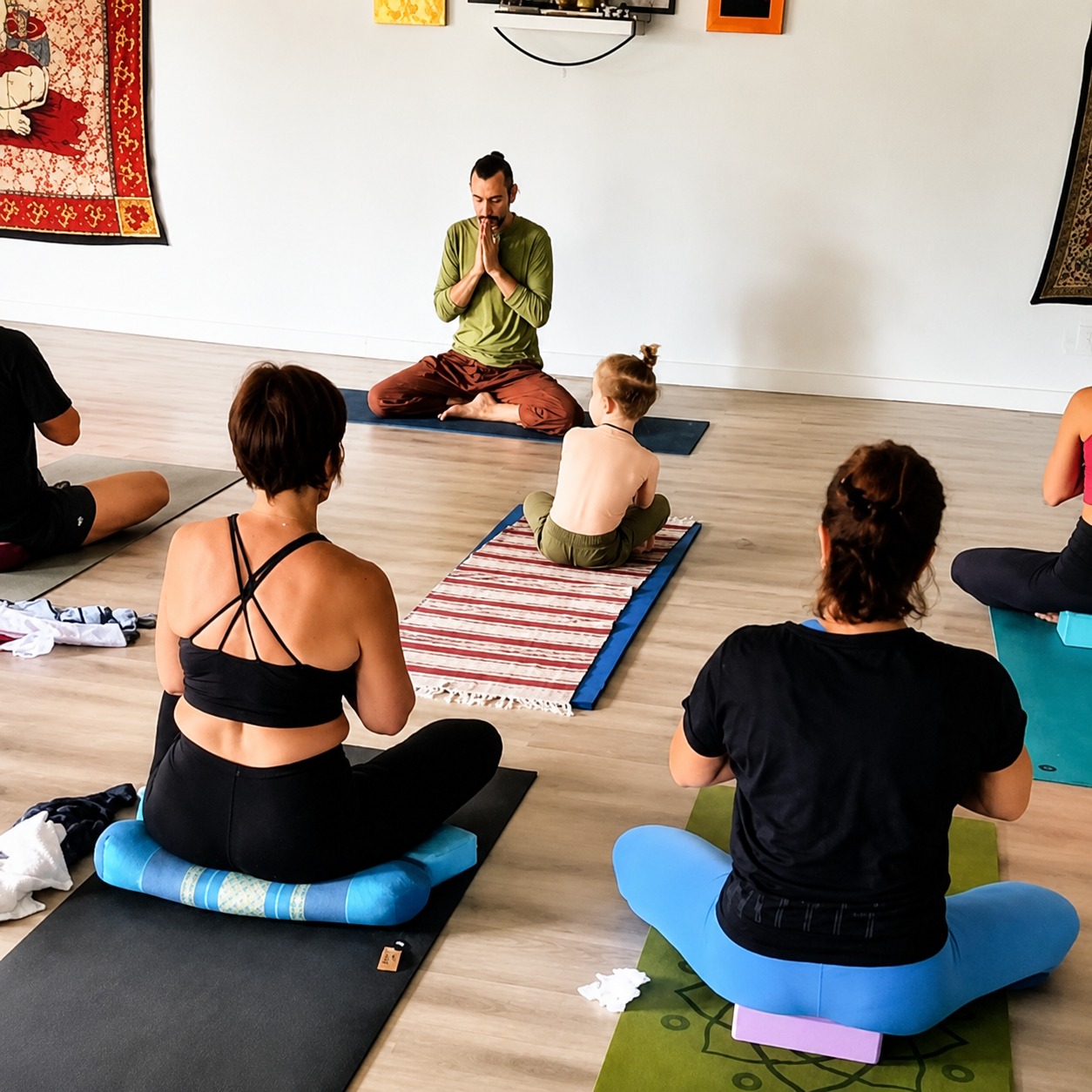
Technique is learned before repetition. Practice is then adapted by the parent to the child in front of them.
A free introduction for parents
See how we teach before you decide.
Watch this short parent guide and see our approach for yourself. No purchase is required. Complete guided practices and the progressive Family Integrity library remain inside the membership.
Family Integrity · Membership
Build a family practice for US$30/month.
One thematic membership for the Family Integrity portal. It does not unlock teacher trainings, certification, Art of Adjustment or other premium PRANA programs.
US$30 / month
Checking your access…
Secure recurring payment through Stripe. Cancel through the billing portal; access continues to the end of the paid period.Family Integrity · Membership
Choose what your family needs now.
This is not one forced course. Begin with the module that fits your family, then add the next step as practice becomes familiar.
01
Start Here
Read the short practice guidance and the Family Integrity book. Understand the role of the parent before trying to correct the child.
02Adult Beginner Foundation
Build your own basic practice first. Personal experience gives the parent a much better basis for helping a child.
03Asana with Children
Use short starting sequences and reusable blocks. Age helps you choose where to begin; the child in front of you decides how you continue.
04Full Family Practice
The same full sequence with progressively less external support. Move from music, subtitles and count toward count only as the sequence becomes familiar.
05Pranayama Foundation
Begin with Kapalabhati and its compensating Ujjayi Vyayama 01 practice. Additional techniques are introduced step by step rather than forced by age.
06Practice Library
Individual asanas and movement blocks let you assemble a shorter practice when the full sequence is not appropriate.
07Understanding / Book
The book and short guides explain how to work with the child, adapt the practice and gradually reduce external support.
These are not levels, as they may first appear. They are steps.
Their purpose is to gradually help your child move from your support toward their own practice.
Their purpose is to gradually help your child move from your support toward their own practice.
Ready to begin?Open the complete Family Integrity practice library.
Subscribe — US$30/monthParent acknowledgement · required
Please confirm before opening the practice library.
Family Integrity is designed for a responsible adult to use with a child. Age labels are approximate starting points, not instructions to progress automatically.
- I am at least 18 and I am the child's parent, legal guardian or an adult authorised to supervise the child.
- I will choose the level according to the individual child's current capacity, attention and comfort, and I understand that I may step back at any time.
- I will personally supervise every practice. I will not force breathing, movement or breath retention, turn retention into a contest, or encourage rapid breathing or hyperventilation.
- I will stop the practice if the child experiences pain, dizziness, distress, unusual shortness of breath or any other concerning symptom, and I will seek qualified medical advice when appropriate.
- I understand that these materials are educational and are not medical diagnosis, treatment, screening or individual healthcare advice. No particular health or performance result is guaranteed.
- I have read the Terms of Use and Privacy Policy.
Asana · Before practice
Two short guides before you begin.
Watch both guides, print the Family Integrity practice guide and keep it in front of you. If a form is unavailable, simplify it and apply the same principle to every asana.
Parent example and practice structure
Essential alignment and common risks
Print the practice guide · RU / EN / ES
Read Family Integrity / The Emergence of the Overman for the deeper methodology of parental example, adaptation and independence.
Pranayama · Before practice
Watch the beginner overview first.
This guide introduces the order and gentle starting form of all five techniques. The readiness cards below determine which techniques belong in the child’s current practice.
Pranayama · Beginner overview
Kapalabhati → Ujjayi → Uddiyana → Agnisara → Nadi ShodhanaPrint the practice guide · RU / EN / ES
Keep it in front of you and adapt every practice to the child’s readiness and comfort.
Full Family Practice
Four complete sequences. Less support over time.
For the parent
Adult Beginner Foundation
The adult is not an operator of a child's video. Begin with your own foundation and learn through practice.
Pranayama · first step
Kapalabhati → observation → Ujjayi Vyayama 01
At the beginning we recommend one to three one-minute Kapalabhati rounds with one minute of observation between rounds, followed by a short Shavasana. Ujjayi Vyayama 01 then completes the basic practice as the compensating technique. Do not force the child; offer practice through your own example.
Pranayama path
Choose by readiness. Age is only a starting point.
The parent must decide which level is appropriate for the individual child. Begin with the simplest set, observe the child's breathing, attention and comfort, and move forward only when the current set is familiar and unforced. It is always acceptable to remain at a level or return to an earlier one.
Level 1
First breathing set
For the youngest or a first practice: rhythmic Kapalabhati followed by slow Ujjayi Vyayama 01.
Level 2Follow the guided practices
Complete Kapalabhati and Ujjayi guidance, then close with Nadi Shodhana.
Level 3 · around 5+Add Uddiyana
Introduce one or two gentle Uddiyana approaches without struggle for air.
Level 4Add Agnisara
Build gradually from a small, calm amount according to readiness.
Full practice · around 7+Practise the complete sequence
For a child who has comfortably learned every preceding component.
Level 1 · youngest / first practice
Rhythm, observation and length of breath.
- Kapalabhati: three one-minute rounds, with one minute of quiet observation between rounds.
- Ujjayi Vyayama 01: a comfortable number of cycles. Try, explore and stop without a required target.
Kapalabhati introduces rhythmic breathing and activation. Ujjayi Vyayama 01 follows as the slower, compensating practice and develops the experience of breath length.
Level 2 · next step
Follow the complete guided components.
- Kapalabhati: follow the guided progression — first round through both nostrils, second round through both nostrils, third round left, right and then alternating active exhalations.
- Ujjayi Vyayama 01: follow the sequence offered in the guided practice.
- Nadi Shodhana: practise separately at the end, following the video guidance.
Level 3 · around age 5 or readiness
Add Uddiyana Pranayama.
- Kapalabhati: gradually move toward a one-minute warm-up and longer second and third rounds, only as the practice remains stable.
- Ujjayi Vyayama 01: complete sequence.
- Uddiyana Pranayama: begin with one or two gentle approaches. Retention must never become a struggle for air.
- Nadi Shodhana: close the practice.
Level 4 · next layer
Add Agnisara Dhauti.
Keep the Level 3 sequence and introduce Agnisara calmly, beginning with a small accessible amount. Increase only when technique, comfort and attention remain stable. Close with Nadi Shodhana.
Full practice · approximately 7+ or readiness
All techniques in one continuous guided sequence.
This is the upper step for a child who can already practise every component comfortably and attentively. The parent still supervises and may shorten, modify or return to an earlier set.
Current architecture
Seven blocks. One repeatable learning pattern.
This page is the container we will now fill with the finished Family Integrity videos. It deliberately does not introduce a price, checkout or certification before those decisions are made.
01
Orientation
Start Here
Why families practise asana and pranayama together, what the parent is responsible for, how to organise the space, and what to observe before, during and after practice.
Intro / method videoReady to fill
02
Pranayama
Kapalabhati
A complete child-appropriate module: parent instruction, observation points, a quick-reference PDF and a separate ten-minute guided daily practice. The Family Integrity book provides the wider method and context for practising with a child.
03
Breath + movement
Ujjayi Vyayama 01
Benefits, technique and a progressive path from the basic variation to balance work and eyes-closed practice, followed by a separate guided session. Breathe slowly and comfortably, keep breath and movement synchronised, and avoid rapid breathing or hyperventilation.
04
Pranayama
Uddiyana Pranayama · Full Uddiyana Bandha
Introduce one or two gentle approaches, then add volume gradually according to readiness. Retention must remain controlled and must never become a struggle for air.
05
Kriya
Agnisara Dhauti
Begin calmly with a small accessible amount and integrate more only when the child is ready.
06
Pranayama
Nadi Shodhana
A separate quiet closing practice. Follow the breathing pattern in the video rather than treating it as the alternating third round of Kapalabhati.
07
Asana
Asana Practice · Alignment & Progression
The parent first learns what to look for. The practice is then assembled from reusable movement blocks and recommended starting sequences that can progress or step back according to the child's capacity.
Learning layer
Principles · space · observation · alignmentReady to fill
Master practice / source sequenceReady to fill
Reusable movement library
Asana progression3 4 5 6 7+ ↑
Recommended starting points, not ceilings.
Age helps the parent choose where to begin. The child's acquired capacity determines whether to stay, move forward or return to an earlier sequence. Exact durations and asana counts will be set from the real source practice rather than invented in advance.
Age 3 · First sequence
Shortest structured entry. A small number of repeatable elements, with the parent protecting the quality of the whole session.
Age 4 · Building rhythm
A slightly longer sequence once the child can remain inside the structure without the practice becoming a negotiation at every step.
Age 5 · Building continuity
More continuity and more elements when attention, coordination and familiarity allow it.
Age 6 · Longer foundation
A longer integrated sequence, still adjusted by observation rather than by age alone.
Age 7+ · Full foundation
The full gentle foundation can become the recommended starting path when the child is ready for sustained practice.
Capacity path
A prepared child may move ahead earlier. If quality, attention or stability falls apart, the parent can step back. Progression is reversible.
Working rule
Start with the recommended sequence. Move forward when it has become stable. Step back when the longer sequence reduces the quality of practice.
Supporting material
Family Integrity · Yoga with Children: Environment, Practice, Autonomy
The book accompanies the video portal. It explains the family environment, parental role, boundaries, adaptation and autonomy. It does not replace visual instruction where movement and technique need to be seen.
Role in the productSupport the practice. Do not become the practice.
Build status
Back to Family IntegrityThe progressive pranayama path is connected.
Five readiness-based levels now lead from the first Kapalabhati and Ujjayi set to the complete guided pranayama sequence. Parent guides and trailers for Uddiyana, Agnisara and Nadi Shodhana can be added without changing this architecture.