Teacher training
Led Class — group rhythm
Synchronized led practice, counting, discipline and teacher supervision.
This is a contextual video library: real teacher training, practice, adjustment, student journeys and life around the school. The videos remain on YouTube; this page explains what each one shows and where it belongs in the Prana Integrity method.
Teaching practice, observation, assessment, specialised workshops and completion.
Synchronized led practice, counting, discipline and teacher supervision.

Teacher trainees practise movement, breath, counting and verbal cueing in several languages.

A second view of assessment: synchronized Surya Namaskar, standing work, balances, backbends and seated practice during a real practical examination.
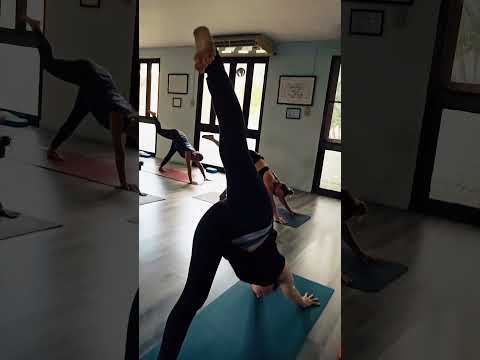
Specialised movement work for hip capacity within a broader training toolkit.

Two-teacher support changes the conditions of Urdhva Dhanurasana through stabilisation and directed traction rather than simply pushing deeper.

A teacher trainee observes Mysore teaching, adjustments and room management rather than doing personal practice that day.

Certificate handover and a warm completion moment after training.

A separate, close human moment of certificate handover, gratitude and completion.
Hands-on methodology, props, support, traction and supervised partner practice.

Hands-on adjustment training with pair and small-group practice.

A short safety lesson: hands-on work must preserve breathing mechanics.

A short warning about inappropriate neck loading during hands-on work.
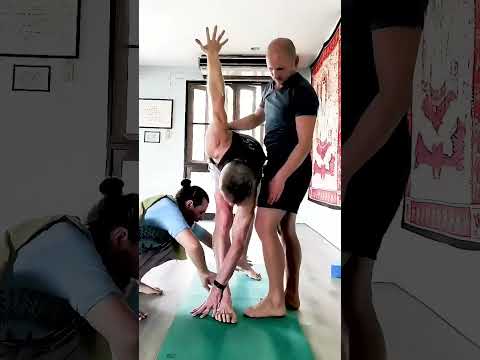
The teacher physically guides the assisting trainee’s movement pattern during supervised adjustment training.

Detailed hands-on teaching with positioning, breath, count and joint direction.

Students practise adjustments in pairs while the teacher supervises and corrects.

A student moves from assisted Kukkutasana to independent repetition.

Hands-on support in standing forward folds with attention to the pelvis and movement direction.
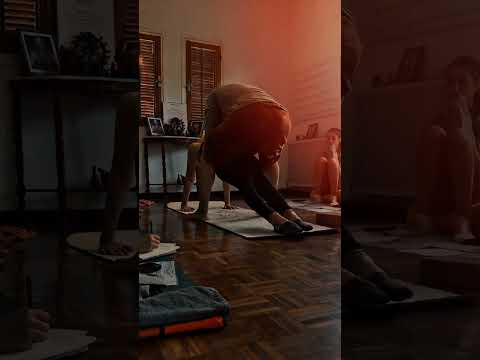
Paschimottanasana, strap work and Marichyasana adjustment in an educational workshop context.

The wall is used as an external reference for alignment and controlled movement.

A prop changes the direction of support so the student can experience the movement more clearly.

Wall-based standing asana adjustments with attention to planes, axis and direction.
Two-teacher support changes the conditions of Urdhva Dhanurasana through stabilisation and directed traction rather than simply pushing deeper.

Stable external support in Baddha Konasana helps guide the forward movement without simply adding force.
Interview and teaching fragments about injury risk, individual anatomy, pain signals, load tolerance and observation before intervention.

Biomechanics explainer about forward and backward bending in the context of yoga practice.

Interview excerpt: safe adjustment requires anatomy, individual factors, load tolerance and understanding the direction of force.

Interview excerpt: injury risk rises when practitioners ask the body for more than it can currently provide.

Interview excerpt: distinguish discomfort from pain, monitor location and intensity, and do not reproduce pain in an already injured movement.

Elbow hyperextension used as a quick observation cue for joint hypermobility and connective-tissue-aware loading.
Practice atmosphere and functional tasks that change balance, support and movement conditions.

Dynamic practice trailer built around voluntary commitment to training.

Ordinary practice atmosphere with individual teacher attention.


A light, human ending to serious group practice.

Dynamic movement work showing a broader toolkit beyond one fixed sequence.

A soft block and hip-to-hip partner contact turn balance into a shared proprioceptive, coordination and attention task.

Partner support and the wall provide an external reference for alignment while reducing the balance demand.
Teacher-training and Intensive voices, including repeated returns and students looking for serious study rather than a yoga holiday.

Student journey from training to return visits and continued study.
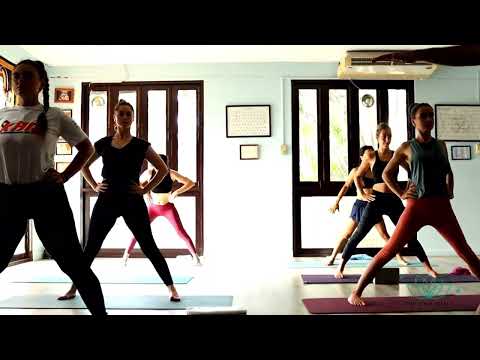
A student reflects on one week of serious Ashtanga study and feeling safe to learn.

Historical 200-hour teacher-training story and later teaching trajectory.

One-week Intensive reflection: only scratching the surface, with teachers always watching.

Adora describes expecting a hard boot-camp, then finding a serious but balanced training environment with challenge, support and room to listen to the body.
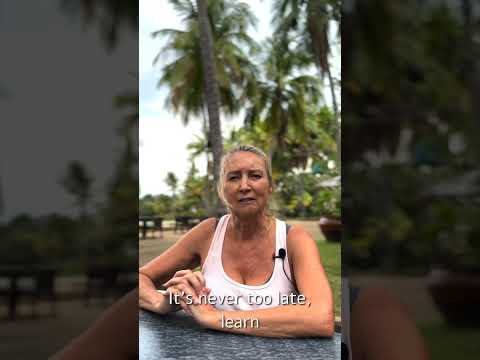
A student follows her teacher’s lineage back to Phuket and studies with her teacher’s teachers.

Multiple participants describe a challenging, practice-based teacher-training process.

General student reflection on hands-on teaching, pranayama and the shala.

Student reflection on philosophy, anatomy, practice and a program broader than asana.

A practitioner with prior experience describes discovering much more depth than expected.

A TTC student describes initial resistance to the intensity of training and deeper engagement after working through it.

A student explains choosing the school for serious, professional Ashtanga study rather than a yoga holiday.

Vee, based in Germany, describes extending an initial stay and returning repeatedly for Ashtanga Intensive study.
Theory becomes useful when it changes what a teacher can see, explain and decide in practice.

Teacher Training lecture fragments on spinal structure, cervical anatomy and intervertebral discs.

Interview material on hyperextension and why visible range should be considered together with joint stability.
Teacher presence outside the asana-only frame, including guided meditation and lived contemplative practice.

Sofya guides a group contemplative practice with grounding, body awareness, attention and breath.

Teaching, meditation, adjustment and group-practice footage for Sofya’s educational profile.

A quiet father-and-son meditation moment showing practice outside the asana-only frame.
Shared practice in which children participate alongside adults — movement, breath, concentration and rest without reducing the work to entertainment.

A Sunday family class moving from physical practice toward pranayama, meditation and savasana.

Dynamic footage of adults and children sharing standing work, strength, seated practice and concentration.

Opening mantra, seated concentration and shared standing practice in a family class.

Mother and son practise Nadi Shodhana together: a quiet example of breath, attention and continuity.
Historical continuity shown carefully: current practice in relation to the tradition and archive material used with context.

Contemporary practice reflected in a portrait of T. Krishnamacharya, visually connecting current Ashtanga work with its historical tradition.
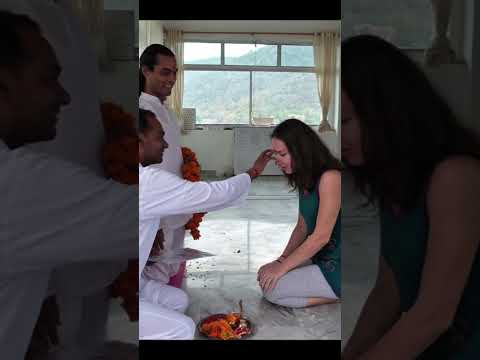
Historical lineage slideshow. Keep names contextual and independently identified before detailed publication.
Shared time, island life and community around the formal training schedule.
Older formats remain useful when clearly labelled as archive rather than presented as the current product.
Art of Adjustment turns hands-on teaching into a sequenced curriculum: 45 lessons from Surya Namaskara through the finishing sequence, with beginner and experienced pathways.
Explore Art of Adjustment →