A soft, continuous sound without throat tension.
← Back to all lectures
Technique · breakdown
Ujjayi
A simple tool. A profound effect.
"Ujjayi" means "victorious breath." An elongated breath with a soft sound, made by gently narrowing the glottis.
Health
Path
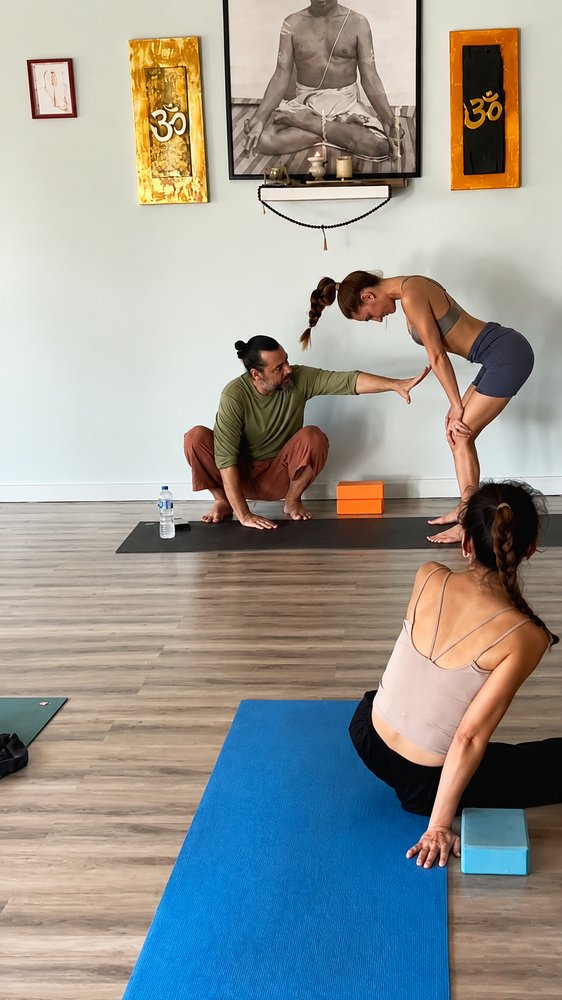
Demonstration
What it looks like in practice
Filmed at our shala. The video will go here later.
Essence
What it is
Ujjayi is an audible breath. The glottis narrows slightly, the airflow slows, and the breath becomes long and even.
Inhale and exhale are equal in sound, speed, and intensity. The sound itself is feedback — you can hear the evenness and control of the breath.
How to perform
Step by step
- Breathe through the nose, mouth closed. Slightly narrow the throat — as if whispering on the exhale.
- A quiet, even sound appears, like ocean surf.
- Make the inhale and exhale equal in length, without effort or strain in the throat.
- Keep the sound soft and steady throughout the whole breath cycle.
- Use Ujjayi in asana and as preparation for pranayama and attention work.
Physiology
What happens inside
Gently narrowing the glottis slows the airflow and lengthens the breath. The sound gives precise feedback on its evenness.
Slow, elongated breathing gently activates the vagus nerve and the parasympathetic system — the nervous system calms down. It's the opposite of the stimulating Kapalabhati.
Narrowing in the throat
The glottis narrows slightly, and the airflow slows.
A long, even breath
Inhale and exhale are equal in length — the breath calms.
Important
Gentle and effortless
Ujjayi is a calm technique. A few reference points:
- the sound comes from a light narrowing of the throat, not from strain or the voice;
- if the throat gets tired or dry, you're pressing too hard;
- the breath stays comfortable and even, with no holds at your limit.
With blood-pressure or heart issues, keep the breath especially soft, with no straining.
Practice focus
What this technique develops
Longer exhalation and a steadier nervous system.
Attention that stays with sensation instead of drifting into effort.
The breakdown
Two lectures
Lecture
Description
$39
Coming soonLecture
Description
$39
Coming soonReady to walk the path in order?
Structured courses arrange these lectures into a sequence — with protocols and practice.
Go to the library